Geothermal energy RAUGEO

Modern geothermal systems can reduce heating and cooling costs by up to 75% , depending on building type and operating conditions. By using renewable energy stored in the ground, they help reduce reliance on fossil fuels and can lower operational greenhouse gas emissions compared with conventional heating technologies.

100% renewable energy

100-year lifespan

10-year warranty

Non-binding price calculation - deep dry drilling

Dimensioning of the primary circuit of a heat pump

Step 1 of 7 Form of dimensioning

Choose the dimensioning method that suits you best

We offer 3 forms of dimensioning

Do you need to heat domestic hot water?

This option will affect the final calculation - DHW heating increases the total length of deep dry wells.

Important: If you plan to use the heat pump to heat hot water, select "Yes."

How many people will be living in the household?

The number of people affects the calculation for heating domestic hot water.

Tip: Only count persons with year-round DHW requirements in the given building.

Enter the value in kW

The range of values is from 1 to 30 kW.

Where can I find this value: In the heating project, or in the design calculation of the implementing company/contractor
Where can I find this value: In the heating project, technical documentation for the heat pump, or from the designer/supplier
Min: 1 kW, Max: 30 kW

What type of building do you have?

The type of construction determines the thermal properties of the building

Total floor area of the building

Enter the total floor area in m². For multi-story buildings, add up all floors.

How to calculate: Only count the usable area, i.e. mainly heated spaces, using geometric shapes such as 10 m x 10 m, 12 m x 15 m, etc.
The range: 1 - 1000 m²

Contact details

Enter your contact details to receive results and contact from companies

Dimensioning result = approximate total length of dry deep boreholes

0 meters

Approximate borehole dimensions:The exact depth must be consulted with the installation company/manufacturer/driller.

REHAU recommends
OPTION 1 = PE-Xa
0 €
Advantages of PE-Xa (in addition to PE-RC):
  • Low thermal aging (active cooling option)
  • High temperature resistance (-40 to +90°C)
  • Seamless probe design (no risk of joint failure)
  • Special outer layer (macro/micro roughening)
  • No risk of stress crack propagation
  • 10-year warranty on the probe
OPTION 2 = PE-RC
0 €
Advantages of PE-RC:
  • High scratch resistance
  • High material durability of 100 years
  • High resistance to crack/scratch propagation
  • Electrofusion-connected probe base

Warning: Dimensioning and non-binding price calculations are for informational purposes only. To confirm the accuracy of the design, contact the drilling contractor or the heating/cooling source installer in the building.

Heating and cooling with geothermal energy

Geothermal heat is energy stored in the ground, which is constantly replenished by solar radiation and the flow of geothermal heat. This energy can be used independently of the weather and season from a depth of 1.5 m. At a depth of 10 m, the temperature remains constant between 8° and 12°C.

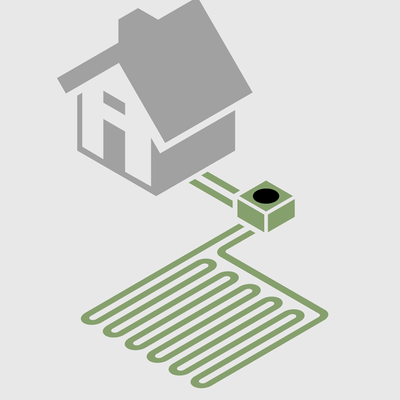
When using heat from the ground, the heat transfer medium circulates through pipes laid vertically, radially, and horizontally. The medium absorbs heat from the ground and transfers it to a heat pump, which uses the energy obtained in this way for heating or, in the case of active cooling, reversibly stores the energy back into the ground.

With its RAUGEO range, REHAU offers high-quality system solutions for using geothermal energy for heating and cooling with a heat pump. In combination with underfloor heating or concrete core tempering, this system is extremely economical.
Why choose RAUGEO?

Why choose RAUGEO? An investment in the future with immediate benefits

Energy savings

Heating and cooling cost reductions of up to 75%, depending on building characteristics and system design.

Renewable geothermal energy

Uses renewable energy stored in the ground and can reduce operational greenhouse gas emissions compared with conventional heating systems.

Reduced exposure to energy price fluctuations

Greater predictability of long-term operating costs.

Minimal maintenance

Designed for low maintenance requirements throughout its service life.

Long service life

System components are designed for a service life exceeding 100 years. The RAUGEO PE-Xa geothermal probe is covered by a 10-year warranty.

Heating and cooling

One integrated system for year-round indoor comfort.

MEPA+ REHAU - NextVIT

Revolučné riešenie predstenovej inštalácie, ktoré spája špičkovú jednoduchosť montáže, flexibilitu a moderný dizajn. Vyvinuté na základe dlhoročných skúseností a potrieb inštalatérov.

Geothermal probe RAUGEO PE-Xa green

Geothermal probes are usually installed at a depth of up to 300 meters so that the constant temperature at greater depths can be used effectively to generate energy.
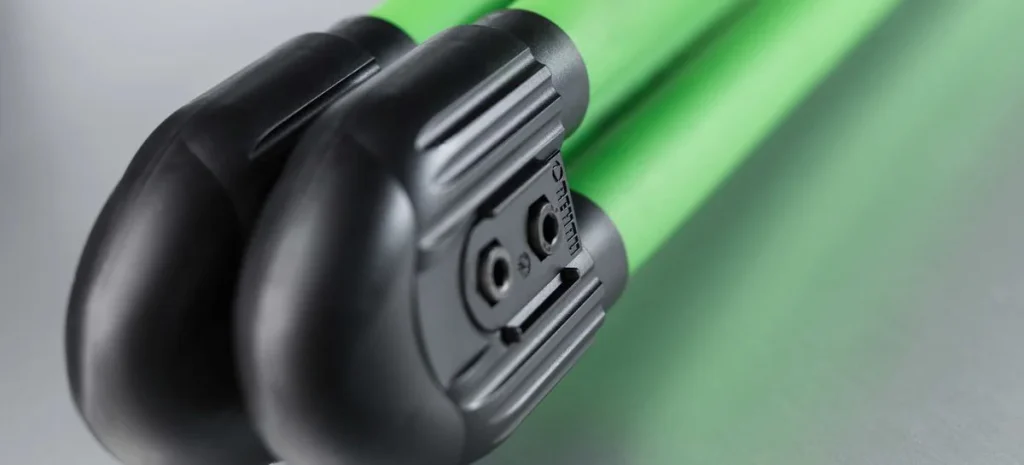
In terms of maximum safety requirements, REHAU offers the RAUGEO PE-Xa green probe – the only geothermal probe made of highly resistant, cross-linked polyethylene, without welding at the base of the probe. The roughening of the outer shell of the probe ensures perfect bonding with the RAUGEO FILL 2.0 filling material, which ensures the vertical and horizontal hydraulic tightness of the system against the surrounding substrate (i.e., there is no risk of groundwater contamination).

Possible uses:

  • Heating and cooling in combination with a heat pump
  • Free cooling (passive cooling of living spaces)
  • Anti-icing of open areas, e.g. heating of bridges and ramps
  • Heat storage in the ground, e.g. in combination with solar systems
  • Ideal for combination with surface heating and cooling or for tempering concrete cores

Advantages:

  • High scratch resistance
  • High material durability of 100 years
  • High resistance to crack/scratch propagation
  • Low thermal aging (active cooling option)
  • High temperature resistance (-40 to +90°C)
  • Seamless probe design (no risk of joint failure)
  • Special outer layer (macro/micro roughening)
  • No risk of stress crack propagation
  • 10-year warranty on the probe

Flat plate collector for efficient heating with geothermal energy

Heat is extracted from the ground at a depth of 1.5 m using a horizontally installed flat plate collector.

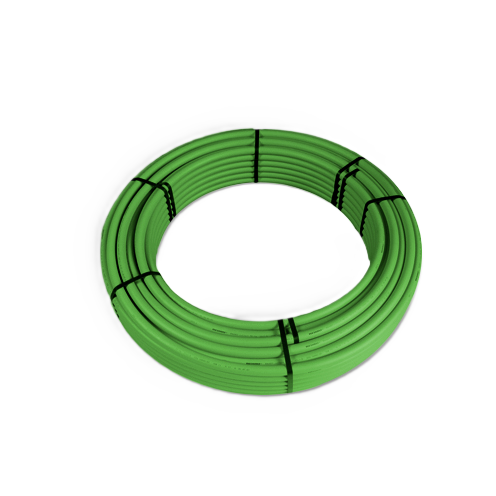
The pipes of the RAUGEO collect PE-Xa green flat plate collector are highly resistant to mechanical damage and point loads. The excavated material can usually be used as a substrate. This saves on costly soil replacement and reduces installation costs.

For low point load and temperature resistance requirements, REHAU also offers flat plate collectors made of PE100 and PE100-RC.

Possible uses:

  • For heating in combination with a heat pump
  • For use in large areas (from 200 m²)
  • Low installation costs
  • No sand bed required thanks to PE-Xa material
  • Suitable for combination with underfloor heating

Advantages:

  • Highly resistant PE-Xa material (cross-linked polyethylene)
  • High operational safety of PE-Xa pipes
  • No costs associated with soil replacement, as no sand bed is required
  • Low operating costs and high efficiency
  • Possibility of using cost-effective ploughing technology
  • Long-term operational safety thanks to the material’s high resistance to point loads and stress cracks
  • Easy installation on large plots of land

Foundation piles and geothermal energy utilization in one

Energy piles are used in modern civil engineering for foundations on low-bearing subsoil. Collector pipes are mounted on the piles. That is why we refer to energy piles, which work on a similar principle to short heat probes and can be used for heating or cooling.
Thanks to their excellent material properties and small bending radius, RAUGEO collect PE-Xa pipes are suitable for use in energy piles.

Possible uses:

  • Installation of pipes in foundation piles
  • Heating in combination with a heat pump
  • Free cooling (passive cooling of living space)
  • Optimal in combination with surface heating and cooling
  • Temperature control of concrete core

Advantages:

  • Covering a large part of energy consumption with energy obtained from the ground
  • No additional space required for installation
  • Easy installation thanks to the small bending radius of PE-Xa material, even at low temperatures
  • Maximum operational safety thanks to PE-Xa material (cross-linked polyethylene)
  • The pipe is also available in an oxygen barrier version as PE-Xa plus

We are REHAU

REHAU stands for technical innovation, quality, and responsibility for the future. For decades, we have been combining technical expertise with forward thinking to deliver solutions that truly improve everyday life – from construction and mobility to interior design and healthcare applications.

At the heart of our efforts are modern polymer-based technologies and a commitment to sustainability. This is demonstrated by our growing focus on renewable energy sources – including geothermal heating and cooling systems that help save energy, reduce emissions and provide a high level of living comfort.

We are shaping the future of engineering – for people, for the planet.

Start saving today

Many households can reduce annual heating costs compared with conventional fossil-fuel heating systems, depending on energy prices and building characteristics.

Your questions about RAUGEO

Answers to questions about the system, configurations, installation, maintenance, as well as savings and comparisons with other types of heating and cooling

What is a deep geothermal dry well and how does the ground-water system work?

The system uses the constant temperature of the ground via boreholes and a heat exchanger (probes) for heating in winter and cooling in summer.

Why choose a ground-water system with a geothermal deep dry well instead of conventional heating?

It is environmentally friendly, energy efficient, and cheaper to operate in the long term due to the long service life of its primary circuit, i.e., probes (100 years +). In addition, it reduces dependence on fossil fuels.

Is it possible to combine a ground-water system with a geothermal deep dry well and underfloor heating?

Yes, this system is ideal for low-temperature surface heating/cooling systems such as underfloor heating or cooling ceilings. Of course, it can also easily handle radiator heating systems designed for lower temperature gradients for more efficient operation.

How many boreholes do I need for my house?

This depends on the size of the building, heat loss, geological conditions, and cooling requirements. Our configurator will help you calculate the optimal total length of probes.

How can the online configurator help me?

Simply enter the basic data about your house, and the configurator will calculate the total length of geothermal dry wells required, including probes, and the approximate price of the system.

What input data will I need for the configurator?

Some of the following parameters: heat loss of the building, heat output of the heat pump, type of building, living area in m², location, number of people in the household for hot water heating…

How much does a ground-water system with a deep geothermal dry well cost for a family home?

The price depends on the number of boreholes, the type of heat pump, and the overall installation. Our tool will give you a more accurate estimate of the price for part of this system, namely the primary circuit, which is the source of low-potential energy for the ground/water heat pump.

What are my operating costs compared to gas or electricity?

Deep dry drilling systems have higher initial costs but significantly lower operating costs. Savings can reach 25–70% per year, depending on the type of primary energy with which the system is compared (gas, electricity, wood, biomass, etc.).

Are there subsidies or government support for geothermal systems?

Yes, support programs for renewable energy sources are often available. The SIEA (Slovak Innovation and Energy Agency) regularly provides information about current opportunities on its website.

How is the drilling carried out?

Specialized drilling equipment will arrive at your property to drill and install probes to a depth of 80–150 m. The work usually takes 1–2 days per borehole (depending on the subsoil).

Is construction documentation or a permit required?

Yes, for wells deeper than 30 m, a hydrogeological assessment and notification/permit application are required. We can help you with this, or rather our partners in the field of drilling and geological work.

What is the service life of a geothermal deep dry well system?

The PE-Xa probes installed in boreholes have a service life of more than 100 years, while ground-water heat pumps usually last 20–25 years.

Why is a ground-water system with a deep geothermal dry well more advantageous than a gas boiler or electric heating?

Although the ground-water system requires a higher initial investment, its operating costs are lower – it uses stable energy from the ground, which is free. In addition, it is not as dependent on primary energy prices, i.e., gas or electricity for heating/cooling, thanks to its high efficiency, and offers long-term returns and energy independence.

How does a ground-water heat pump differ from an air-water heat pump?

Air source heat pumps are affected by outdoor temperatures – their efficiency decreases in winter when you need it most, especially during frequent defrost cycles (DEFROST mode), due to increasingly mild but humid winters. Their service life is also significantly shorter (10-15 years) due to their basic characteristic – outdoor installation with all the weather influences on their construction.

A ground-water heat pump draws heat energy from the surrounding subsoil, where the temperature is stable throughout the year, making it more efficient, quieter, and longer-lasting, thanks in part to the location of its main compressor section indoors.

Is a ground-water system still worthwhile compared to new modern technologies?

Yes – in addition to being environmentally friendly and low-cost, this system has minimal maintenance requirements, long component life, and the option of passive/active cooling, which is particularly advantageous in increasingly hot summers. It is the future of heating, available today.

Do you have more questions?

Please do not hesitate to contact us for more information.
instalacie@rehau.com